← maximum.community 1 / 9

Community traffic safety

See how it works on a street like yours.

Speeding and rolling stop signs are the complaints boards hear most, and the hardest to do anything about. This is a short look at how the problem gets measured, how every case is reviewed by a person, and what your board ends up holding.

Use the arrows, your keyboard, or swipe. About two minutes.

01 — Measure first

Start with what is actually happening.

  • Every vehicle that passes is measured — not only the ones that get flagged. That is what makes the number arguable at a board meeting.
  • The 85th-percentile speed is the figure traffic engineers use to judge a street. On this one it is 28.8 mph in a 25 zone.
  • You also get the worst window of the week, so attention goes where the risk actually is instead of where someone happened to complain.
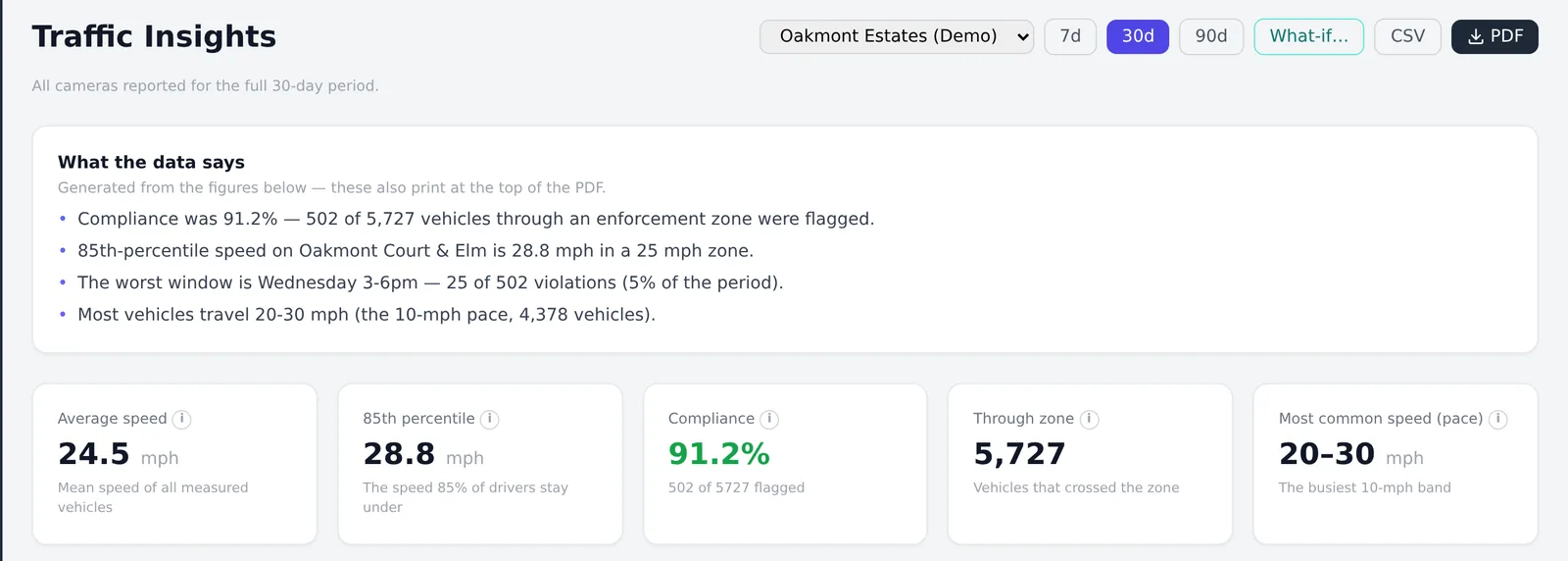
Traffic insights showing average speed, 85th percentile speed, compliance rate and volume for a demonstration community.
A demonstration community. Every community, resident, plate and event shown in this walkthrough is invented.

02 — What the camera sees

A vehicle rolls the stop sign.

The camera records the approach, the stop line and what the vehicle actually did. That clip stays attached to the case from here on, so no one has to take anyone's word for it.

Real roadway footage with every licence plate pixelated. Nothing in this clip identifies a person, a vehicle owner or an address.

03 — One record, all the evidence

Every flagged vehicle arrives with its proof.

  • The clip, the plate, the vehicle, the speed through the zone and how long it stopped — gathered into a single record.
  • At this stage nothing has been sent to anyone. It is a record waiting for a person to look at it.
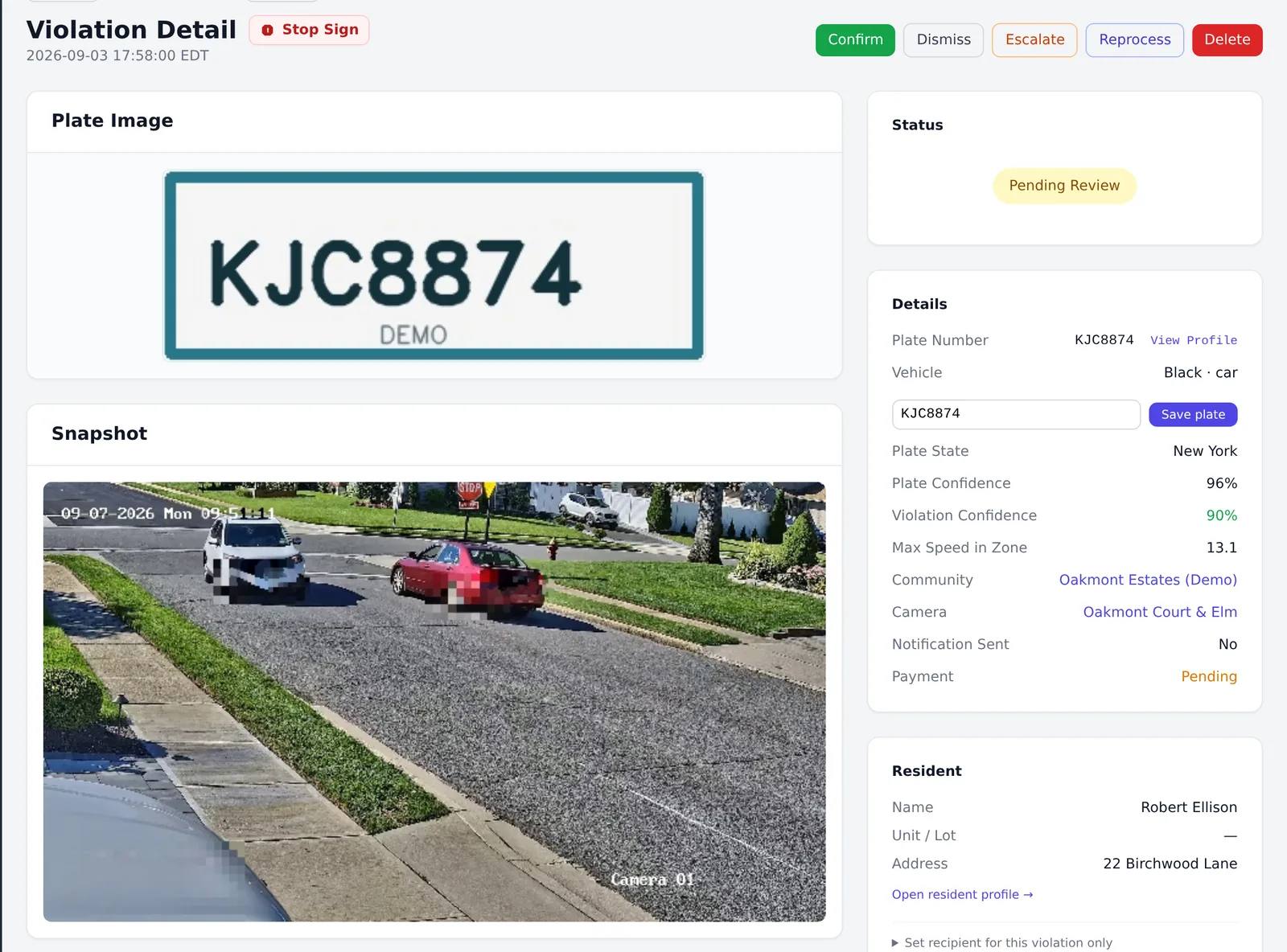
A violation record showing the pixelated plate image, a roadway snapshot, and details including the speed through the zone, confidence and the matched resident.

04 — The part most systems skip

It tells you when it is probably wrong.

A warning on a case reading: this vehicle appears to have stopped just outside the drawn zone, likely a zone-geometry fault. Review the clip before confirming.
The wrongly-accused resident is the worst outcome for a board. The detector is built to raise its hand rather than quietly add another case.

05 — A person decides

Nothing goes out on its own.

  • Every record is confirmed or dismissed by a reviewer. A notice is never issued automatically.
  • Most flagged vehicles never become a notice at all — they are dismissed here, and the dismissal is recorded.
  • Residents on file are matched to their vehicles, so the right household is contacted and visitors are handled differently.
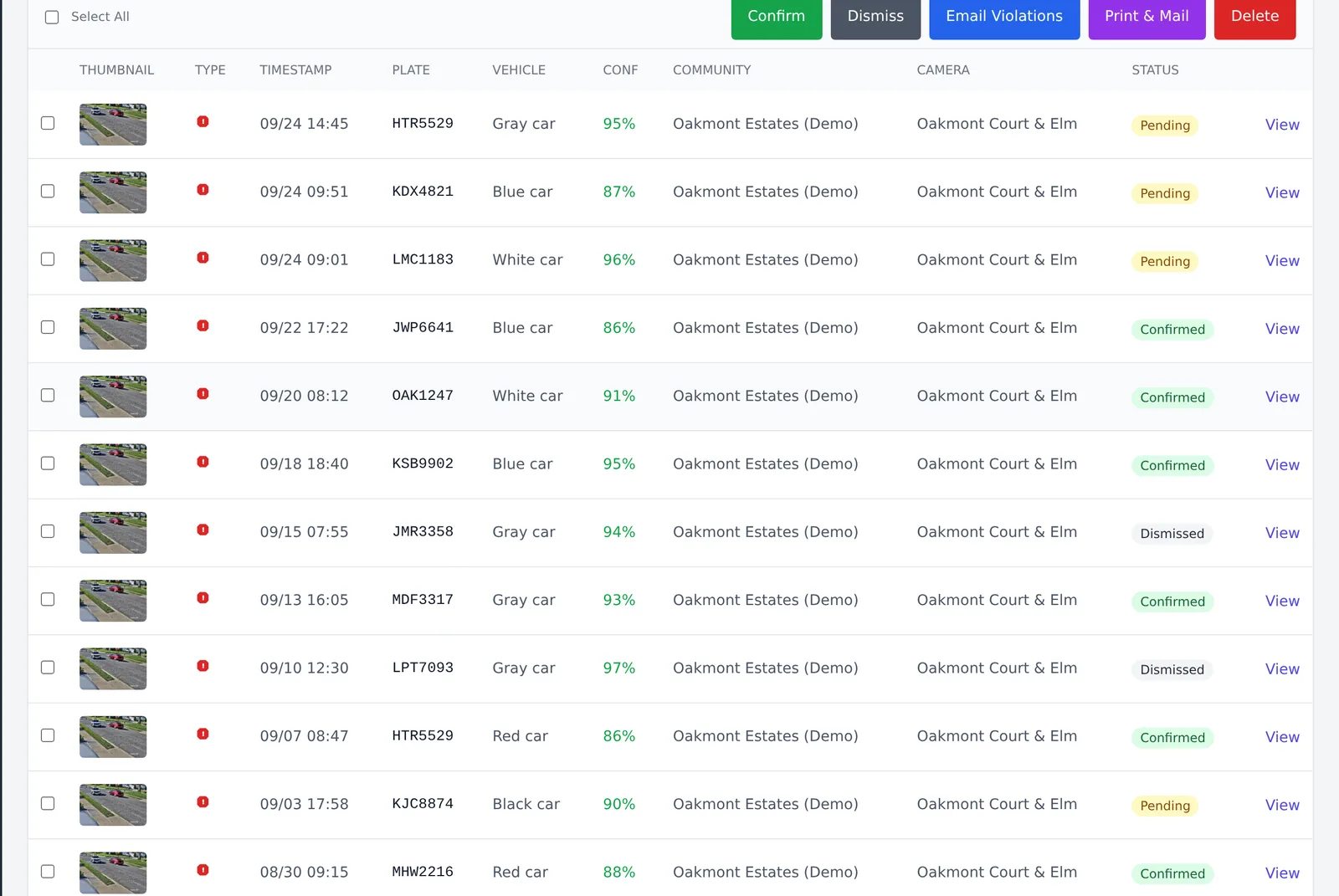
A review queue listing cases with status pending, confirmed and dismissed, each with a thumbnail, time, plate and camera.

06 — What the driver receives

A plain notice, and the same video you saw.

  • The notice explains what happened in ordinary language and links to the exact clip the reviewer watched.
  • The driver can watch it and respond. Nothing is hidden behind an account or a login.
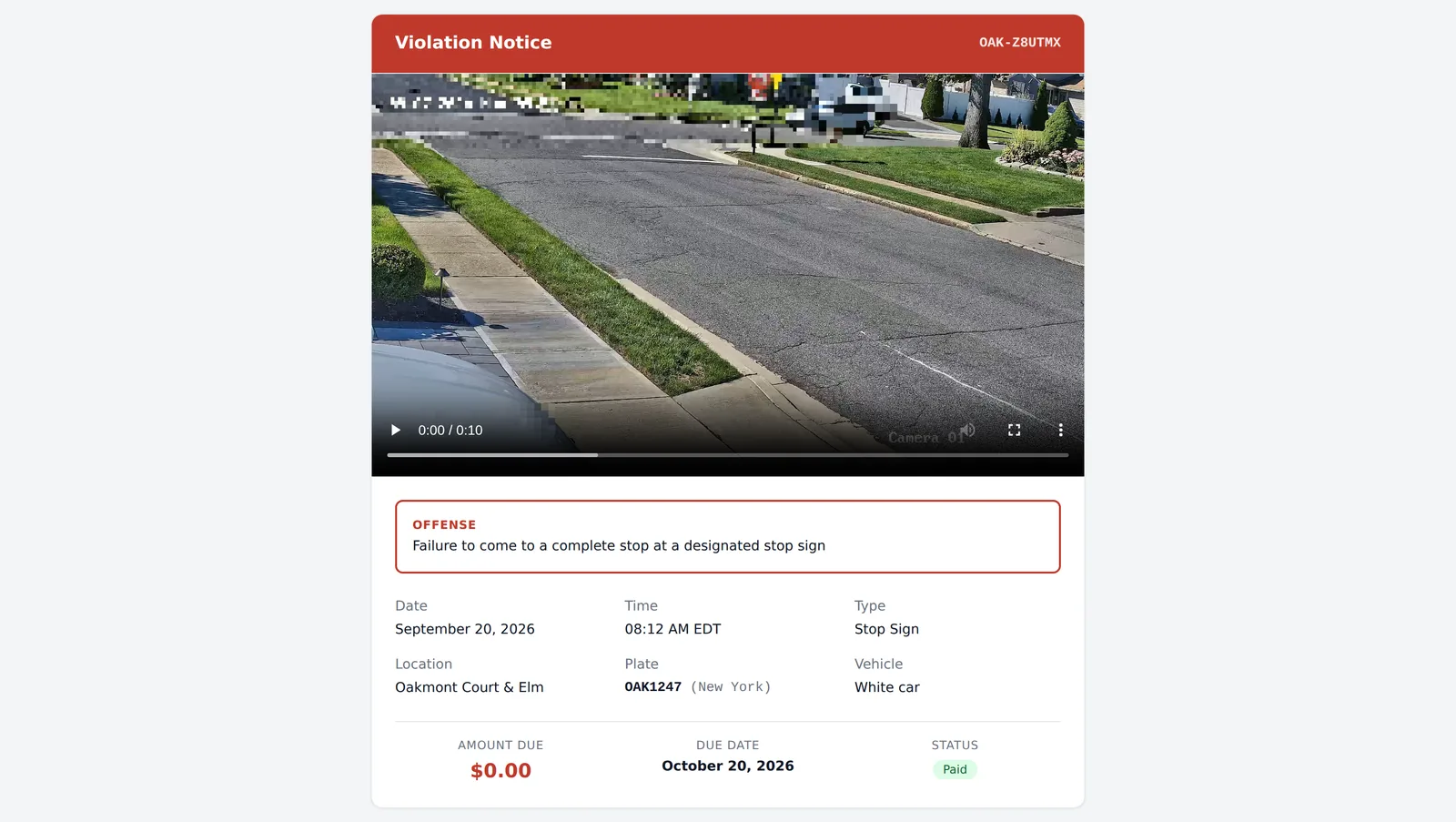
The page a driver receives: a violation notice with the video, the offence described in plain language, and the date, time, location and vehicle.
These are community notices, not citations, and they carry no legal force. A person reviews each one before it is issued.

07 — What your board holds

One page you can defend at a meeting.

  • Every vehicle seen, how many were flagged, how many a person dismissed, and what was actually issued.
  • The dismissals are shown rather than buried. A board that can say how often the system was told no is a board that can answer its residents.
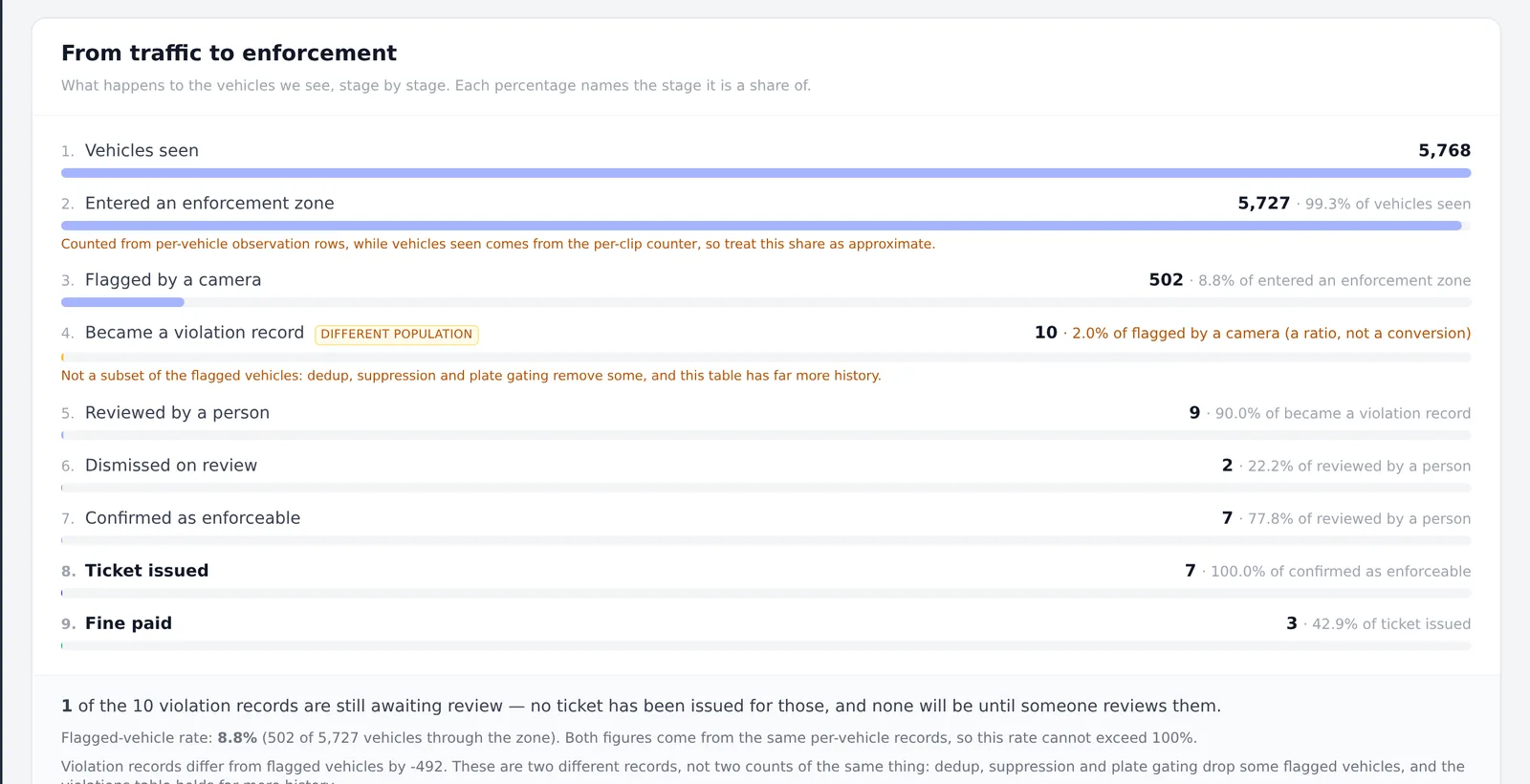
A report showing each stage from vehicles seen, through flagged and reviewed, to dismissed, confirmed and issued.
Stage 8 carries the product’s own internal label. What gets issued is a community notice, not a citation: it carries no legal force, and a person reviews every one before it goes out.

Next step

Want to see this on your street?

We will look at your entrances and roadways, tell you what can be covered with the cameras you already have, and what it would take to cover the rest.

Traffic safety is quoted per site — it depends on how many entrances and roadways you need covered, so there is no single number to quote you here.

Prefer to call? (631) 673-3643. Or go back to maximum.community for what the traffic-safety service covers.
